Almost every parent who asks us about training for their kid starts with the same sentence: "I've heard lifting weights can stunt growth, so I wanted to check first." It's a fair thing to ask, and it's one of the most common myths around strength training for young athletes. If your son or daughter plays soccer, baseball, softball, volleyball, football, or any other sport and wants to get stronger and faster, you've probably wondered the same thing.
The short version is reassuring. The longer version is where the useful details are, so here's what we tell parents who sit down with us.
Where the "Stunts Growth" Idea Comes From
The worry usually traces back to growth plates, the areas of developing cartilage near the ends of a child's bones. They're softer than the surrounding bone, so they're a real consideration in any young athlete. Over the years, stories of injuries from weightlifting turned into a blanket belief that lifting itself was the danger.
What the research and the major pediatric and sports medicine organizations have generally found is that properly supervised strength training isn't linked to stunted growth. The injuries that do happen in the weight room tend to come from the same few things: poor technique, loads that are too heavy for the child, unsupervised or rushed sessions, and horseplay with equipment. Notably, kids get hurt in everyday sports at a much higher rate than they do in well-run strength programs. A season of tackling, sliding, or jumping carries more risk than a thoughtful session with a coach.
In other words, the question isn't really whether kids should lift. It's how, and who's guiding them.
What Strength Training Actually Does for a Young Athlete
Practice builds skill. A coach and a season of games teach your kid how to play. What practice doesn't always do is build the strength, stability, and movement quality that make a young athlete harder to injure and better at the sport.
A well-designed program tends to help in a few ways. It builds strength in the hips, core, and legs, which supports sprinting, jumping, and cutting. It improves coordination and body awareness, which matters a lot during growth spurts when kids can feel awkward in their own bodies. It strengthens the muscles and tissues around the joints, which can help with injury resilience. And it builds confidence. Many kids carry that confidence into the classroom and the team.
One client's parent told us about her 13-year-old daughter, a club volleyball player, who had been dealing with sore knees every season. In our first sessions we focused on landing mechanics, hip strength, and a basic squat pattern with bodyweight and very light loads. No max lifts, nothing flashy. Within a couple of months her mom told us the daughter was landing more softly, felt more stable, and was asking to train more, not less.
What Good Training for Young Athletes Looks Like
If you're considering personal training for your child, here's what to look for. These are the things we hold ourselves to.
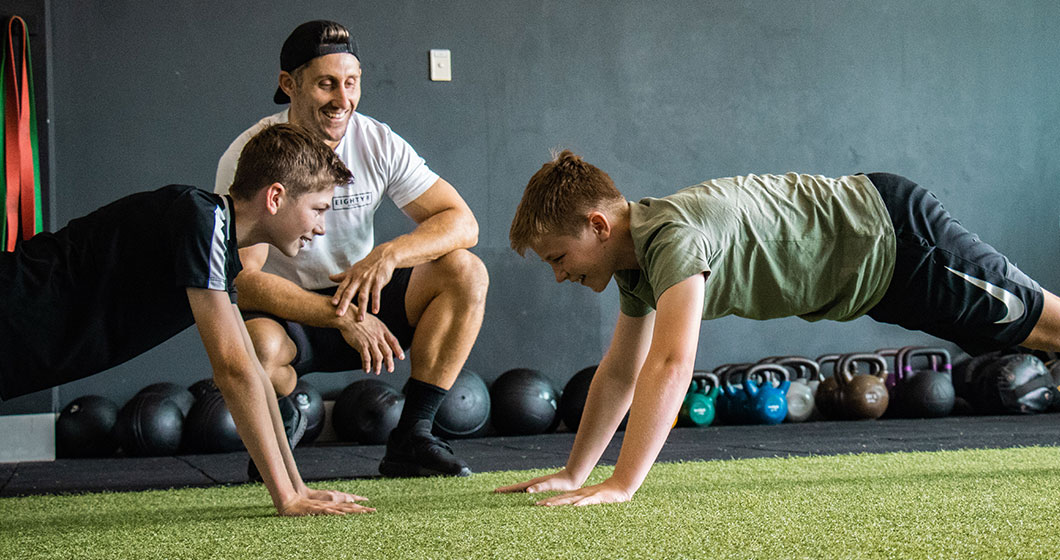
Technique comes before weight. Early sessions should look boring to an outsider. Bodyweight squats, hip hinges, push-ups, rows, lunges, and carries done with excellent form. Weight gets added slowly and only when the movement is clean.
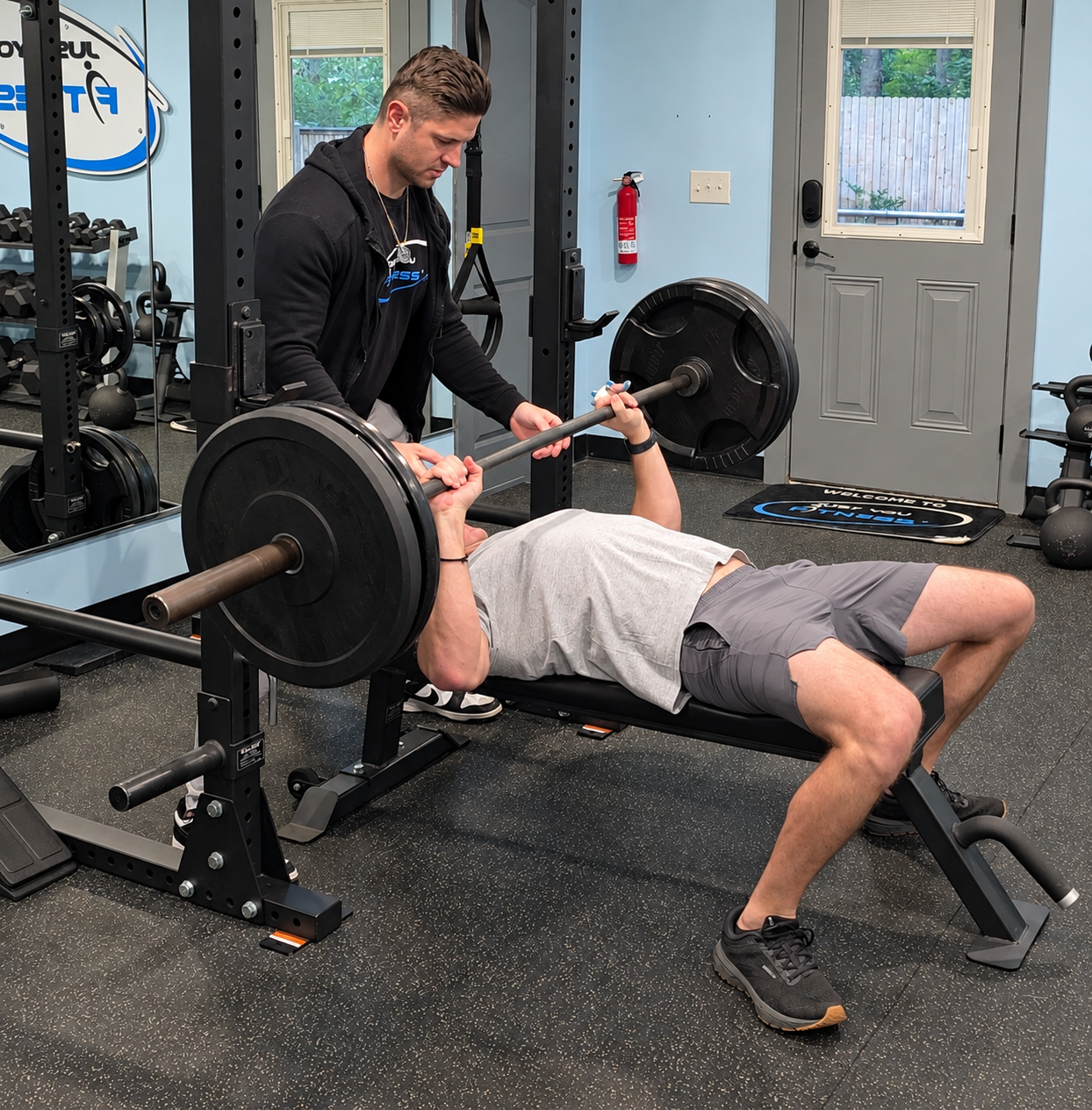
Every set is supervised. This is a big reason private personal training works well for kids. In a one-on-one setting, a trainer is watching every rep and can adjust on the spot, instead of a teenager guessing at a weight room full of strangers.
It's built around the sport and the season. A baseball pitcher and a soccer midfielder need different things, and an athlete in the middle of a season needs a different load than one in the off-season. A good plan fits around practices and games instead of competing with them.
Training stays age-appropriate. Kids and teens aren't small adults. Programs should avoid maxing out, chasing numbers, or copying an adult bodybuilding routine. The goal is building a foundation.
Recovery is part of the plan. Sleep, nutrition, and rest days matter for growing bodies. Most young athletes do well with a couple of non-consecutive training days a week, not daily lifting on top of a full sports schedule.
It stays fun. Kids stick with what they enjoy. A session that feels like a grind won't last, while one that feels like progress will.
Questions to Ask Before You Start
You don't have to be an expert to vet a program. A few questions go a long way. Who will be working directly with your child, and what's their experience with young athletes? How will the program be adjusted around your child's sport and schedule? What happens if something hurts or your child is having an off day? And how do they communicate with parents about progress?
A good trainer will welcome those questions, and parents are part of the process with us from the very first conversation. If you have questions about how that works, reach out and we'll walk you through it.
When to Wait or Check With a Doctor
Strength training isn't right for every child at every moment. If your child is recovering from an injury, has a medical condition, or has pain that doesn't go away, it's smart to talk with their pediatrician or a sports medicine doctor first. A good trainer will want that information up front, and will work with the guidance your child's doctor gives you.
The Bottom Line
For most young athletes, the risk of strength training isn't the weights. It's poor coaching, bad technique, and doing too much too fast. With the right guidance, it can be one of the best things a young athlete does for their performance, their durability, and their confidence.
Curious whether strength training makes sense for your young athlete? Book a free consultation at your local Just You Fitness studio, and bring your questions! We'll be happy to answer them.