Why You Keep Quitting the Gym (And What Actually Fixes It)
Wondering why you keep quitting the gym? It's probably not motivation. Here's what actually breaks down and the structure that fixes it.
By
August 4, 2026


If you've started and stopped a gym routine more than twice in the last few years, I want to tell you something: it's not a willpower problem. We've been coaching people in Charleston since 2011, and I can count on one hand the clients who quit because they just didn't care enough. Almost nobody quits because they stopped wanting results. They quit because the plan they were following couldn't survive contact with their actual life.
Here's what that looks like in practice.
Most people join a gym with a vague plan: maybe a few machines they saw on Instagram, maybe a class schedule they intend to follow. For the first two or three weeks, motivation covers the gap. You don't need a system yet because you're running on enthusiasm. Then work gets busy, or your kid gets sick, or you miss one Tuesday and that turns into missing the next Tuesday too, and suddenly there's no plan left standing. Motivation was doing all the work, and motivation is not a renewable resource.
I had a client a few years back, mid-40s, ran her own business, had joined and quit three different gyms before she came to us. Smart, driven person. Her problem was never effort. It was that every program she'd tried expected her to show up with a plan already in her head, and she just didn't have the bandwidth to build one on top of everything else she was managing. Once someone else was building the plan and holding the calendar slot, she didn't miss a session in four months.
That's the pattern I see over and over. The gap isn't discipline. It's structure.
Telling someone to be more consistent is a little like telling someone to be less stressed. Technically accurate, not remotely useful. Consistency isn't a personality trait you either have or don't, it's a byproduct of a system that removes decisions. Every time you have to decide whether to go, decide what to do once you're there, and decide how hard to push, you're spending willpower you don't have infinite amounts of. Stack three of those decisions in front of a tired person at 5:30pm and it's not surprising the couch wins.
The fix isn't a pep talk. It's removing decisions from the equation entirely.
A few things tend to make the biggest difference, and none of them are about trying harder.
A fixed time slot with someone expecting you. This is the single biggest lever. Not an app reminder, an actual person who knows if you don't show up. There's a real difference between skipping a workout you scheduled for yourself and skipping one where your trainer texts you at 3:58pm asking if you're still good for 4:15.
A plan you didn't have to build. If you're spending mental energy figuring out what to do once you get there, you've already lost some of the battle before you've done a single rep. Walking in and being told "today we're working on your deadlift pattern and doing 20 minutes of intervals" removes an entire layer of friction.
Realistic starting intensity. A lot of people torch themselves in week one — sore for five days, dreading the next session — and that soreness becomes its own reason to skip. The first few weeks should feel manageable, almost easy. You're building a habit before you're building fitness. Both matter, but they're not built at the same speed.
Someone tracking what you can't see yourself. Progress in the first month is often invisible on a scale or in a mirror. It shows up in the fact that the weight you struggled with on week one feels lighter by week four, or that you're recovering faster between sets. Left alone, most people don't notice this and assume nothing's happening. That's usually where the quitting starts.
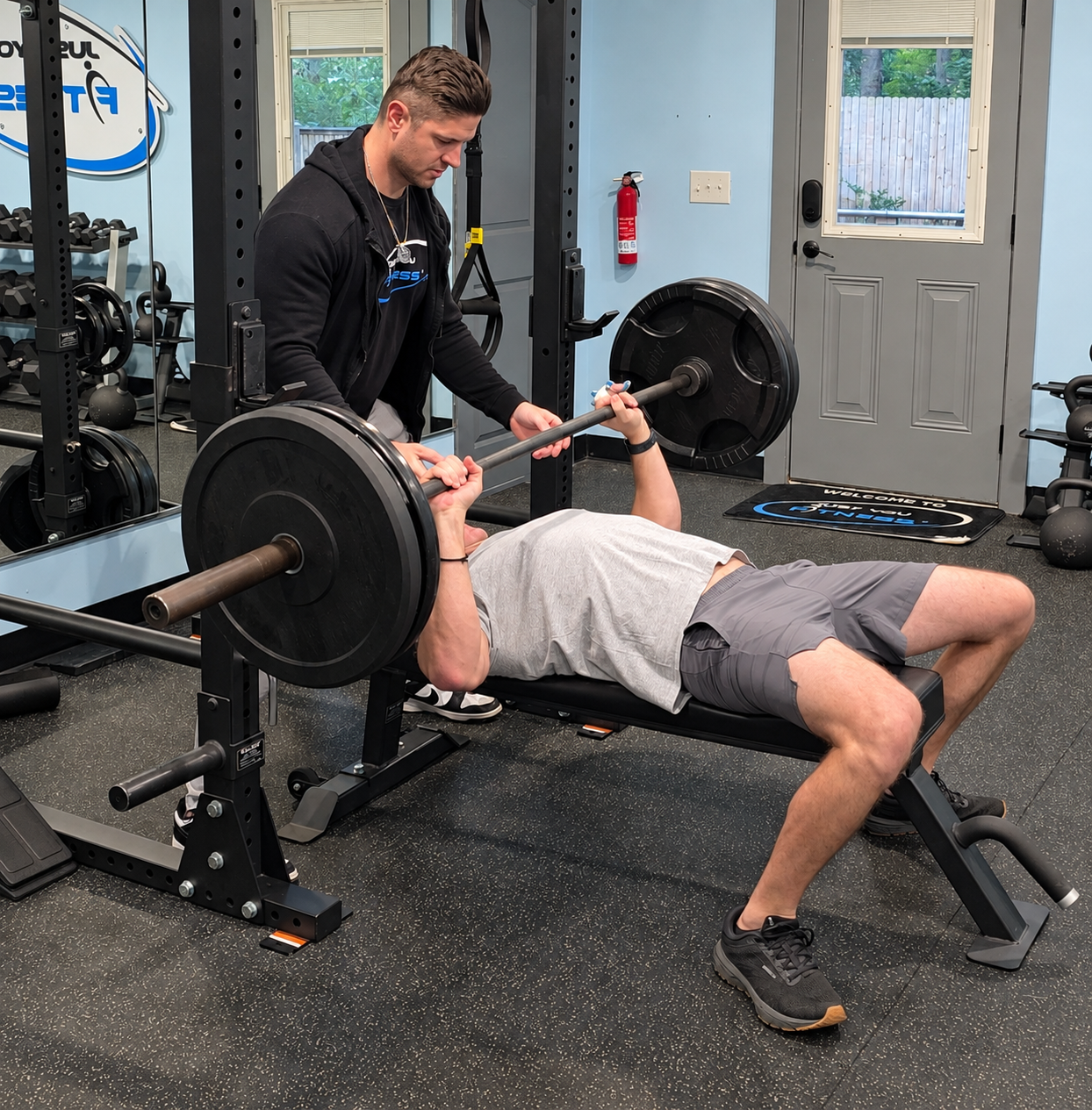
This is a big part of why 1-on-1 training tends to hold up better over time than a standard gym membership. There's no crowd to get lost in and no anonymous check-in kiosk. Your trainer knows your schedule, knows what you did last session, and is expecting you specifically — not "a member," you. When you're a no-show, someone notices the same day, not three weeks later when your membership renews and you feel a flash of guilt.
None of this requires you to become a different person. It just requires the structure around you to stop depending on your motivation being high every single day, because it won't be. Some days it'll be low. The plan should work anyway.
If you've quit before, that's genuinely useful information — not a character flaw. It tells us exactly which parts of the old plan didn't hold up, so we can build one that does.
Curious what that first session would actually look like? Book a free session and we'll walk you through it — no pressure, no sales pitch, just a conversation about where you're starting from.












.png)

.png)


.png)


